Warning Signs Of Failing Balcony Waterproofing In Melbourne Apartments usually appear before a major leak. Be on the lookout for ponding water, mustiness, peeling paint, dampness in the walls, mould or tiles that have given way; these are all indications of water getting in under the surface. The sooner one puts in an investigation the better, as it is the surest way to keep the building structure, the apartment and any adjoining units from being damaged.
Thomas Ashbury here. I have come to expect that problems with a building do not put in a call ahead of time. Your balcony might be unassuming enough in dry weather but a week of Melbourne rain will tell you what is really going on. This is my guide to the signs and their meaning, what most folks overlook and the point at which professional repairs are called for.
The Visible Clues
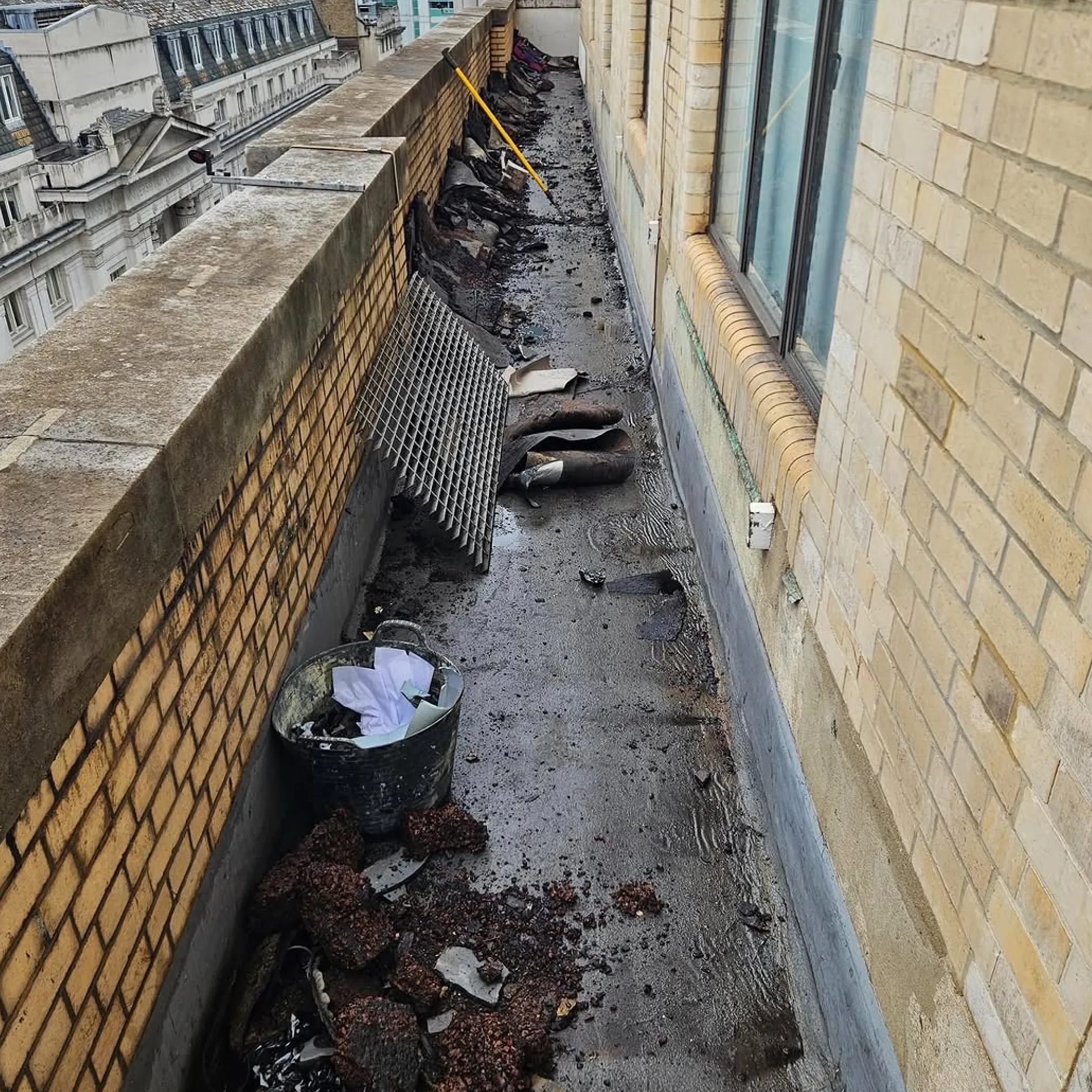
Residents are apt to write off the first defects they see as nothing more than cosmetic. Yet a bubble in the paint, a crack in the grout or a tile out of place can be the tip of a sizeable waterproofing issue.
And it is not just a matter of the finish on top. There is the membrane, the falls to the drain, the sealants and joints, the flashing around the balustrades, doors and walls. To make a repair to the surface is to put a cover on the symptom while the water continues its course below, which is why professional balcony leak repairs address the underlying problem.
A Quick Inspection
Do your own inspection in the wake of some rain and then when things are dry. Examine the underside of the slab, the floor, drainage points, the room beneath and where the wall and door threshold meet. Make a note of any change in the defect after wet weather and put down some dated photos.
- You will want to check for any hollow spots, lifting edges, loose or cracked tiles and grout.
- See if there is rust on the railing, efflorescence, water stains or mould.
- Note any blocked drains or water against the wall of the building.
- Do not forget to record the conditions and odours, especially following a heavy or wind driven rain.
Cracks Will Spread
There is no guarantee a cracked tile is the source of a leak but it will let water through to the bedding layer. It could be due to the membrane wearing out, impact, thermal expansion or a job poorly done on the slab.
Open joints in the grout are something to attend to; it is no replacement for a membrane and will let extra water into the tile assembly. A loose tile is a good indicator of adhesive failure or moisture at work in the substrate.
Do Not Be Fooled By The Tiles
People make the mistake of thinking new tiles will put an end to it. In an isolated case it may, but it will not put right a membrane that has failed. And if you go about removing them without a knowledge of the drainage system you can only compound matters.
An inspection should be thorough, covering the design of the drainage, the perimeter, penetrations and the substrate, though how you go about it is dictated by access and the construction. Given that water has a habit of travelling sideways, a stain in the apartment need not be directly under the problem.
Inside The Apartment
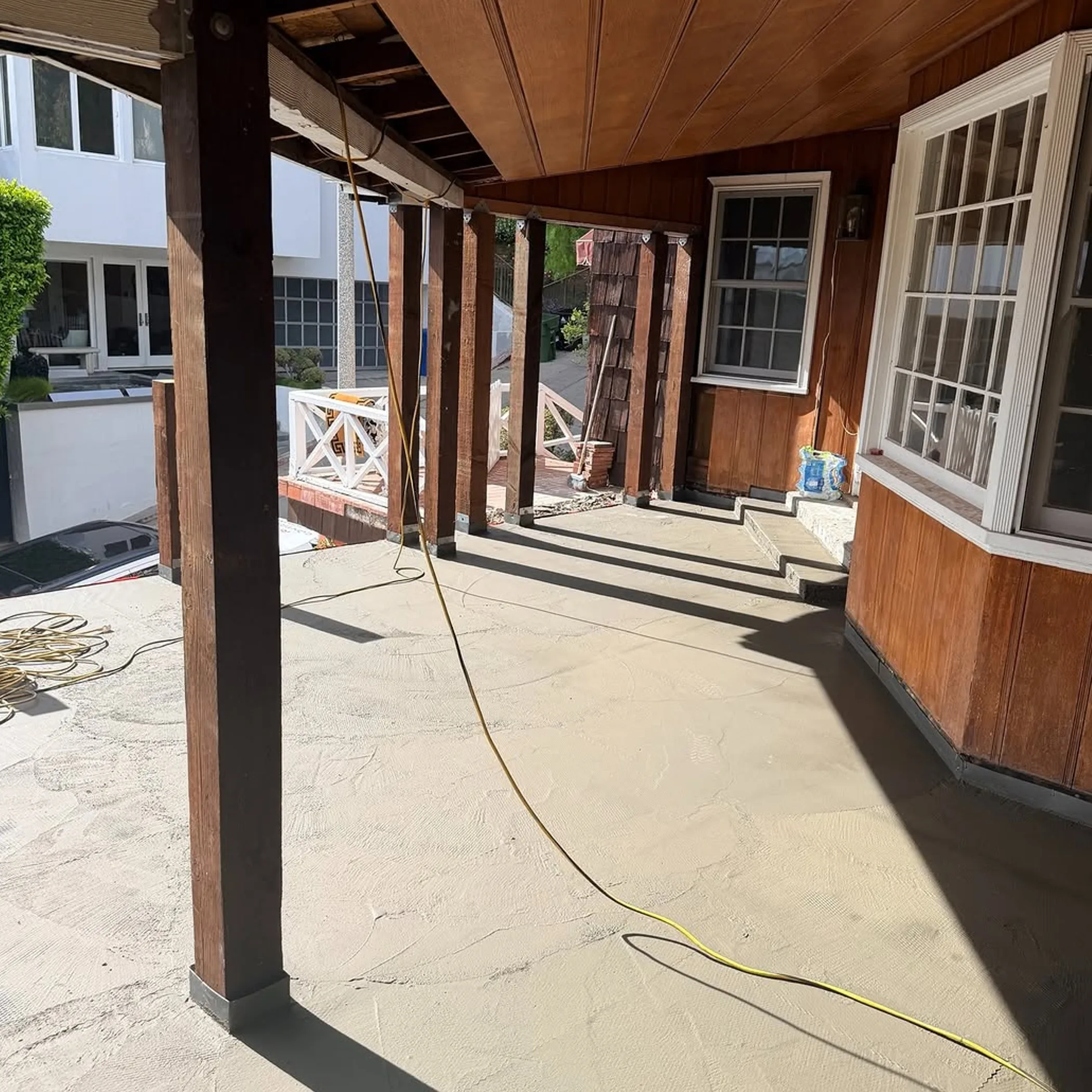
On an internal wall or ceiling a water stain is plain evidence of damage from the balcony. Dampness, bubbling paint and a musty smell suggest more than a single instance of ingress.
The room next to the balcony door warrants a closer eye. A deteriorated membrane at the edge, bad flashing or a threshold that has not held up can let in moisture. Before the origin is apparent you will see it in the plaster, skirting boards or timber flooring.
Put A Mark On It
Take a pencil to the edge of a stain and date it. Then photograph it in the dry and once it has rained. Should the mark darken, put on a smell or get bigger, have the owners corporation or building manager make arrangements for a qualified assessment.
Resist the urge to put a coat of paint over it until you have found the source. You may think it looks better for the moment like a fresh shirt put on over a coffee spill but the problem is still there and you have concealed any evidence of it.
| Signs, Causes and What to Do | ||
|---|---|---|
| Cracked or loose tiles | The finish may have given way due to moisture below, impact or a lack of adhesion | Have the area photographed and an inspection put in hand prior to any re-tiling |
| Water stains on walls or dampness | Ingress from the membrane, wall, threshold or balcony edge is likely | Put in an internal report and make an investigation once the weather has been suitable |
| Efflorescence | Salts are being brought through the masonry, concrete or mortar by moisture | The source must be found and put an end to before repainting or cleaning |
| Ponding water | This can be down to surface settlement, insufficient falls or blocked drainage | Safely remove any debris at hand and have the drainage looked at |
| Concrete spalling or rust | Moisture has got to the metal components or reinforcement | Make it a matter of priority for building maintenance |
Fix Drainage First
One does not want a small defect on the balcony to become a habit of leaking. Water is meant to head for the outlet, not stand still by the balustrade, door or wall. If there is ponding left over after a typical rain and the rest of the surfaces are dry, take note of it.
A drain might be clogged with plant matter, leaves or old materials. But do not go reaching into an outlet or take up a grate if it means putting oneself in an unsafe position; a wet day is no time to be testing your luck on a balcony edge.
Inspection of Falls and Outlets
See where the water is going when it rains but there is no need to flood the balcony on purpose. You will see if it is backing up at the outlet, heading for the building or amassing around the door. Let someone with the qualifications to do so examine the membrane termination, overflow and the like.
In a multi-storey, a drainage shortcoming can be visited upon the apartment below. What is a little water for you could be a mould problem or a stained ceiling for another. It is sensible to report it in a timely fashion.
On Efflorescence and Damage to Concrete

You will find efflorescence as a powdery or crystalline white deposit on the edges of the balcony, grout, masonry or concrete. Evaporation leaves the salts in its wake as the moisture passes through. While it does not pinpoint a leak, it shows that the area has been subject to it.
Rust stains or spalling of the concrete are more than a cosmetic matter and may be a safety issue; the former can be a sign of corroded metalwork, the latter can lay bare the reinforcement. A patch of paint is not the answer.
Urgent Matters
Should there be bulging, deep cracks, loose parts to the balustrade, exposed reinforcement or water in proximity to electrics, then the owners corporation or building manager should be made aware without delay and people kept at bay. Do not attempt to chip off concrete or put paint on rusted structure yourself. There can be concealed damage and height to contend with in these repairs; what seems the economical course is not always so in the end.
Fixtures and Edges
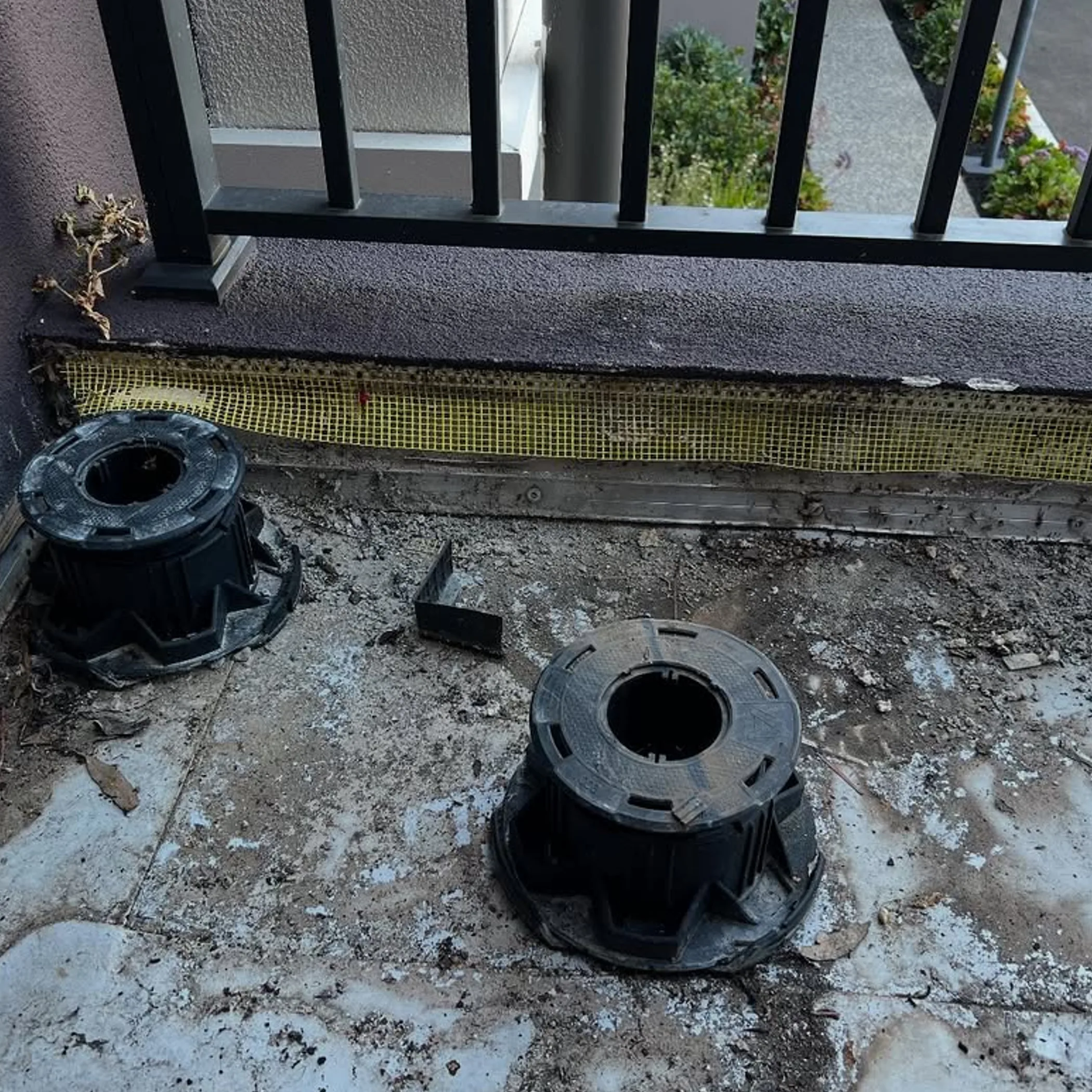
Deteriorated sealant, a railing with rust or fixings that have corroded tell of long exposure to moisture. Fasteners, wall junctions and penetrations in the membrane are ways for water to get in.
And a failed flashing at the door or wall will put water behind the finish. Look for the odd gap or stain under the metal trim; they are easy to miss until the Melbourne weather puts them to the test.
Safety Over Looks
Corrosion on a balustrade connection is not the same as some surface rust on a fitting that can be changed. If a railing is unsteady or has rust at the base, leave it and register a safety concern.
An inspector will want unimpeded access to the balcony and the room next to it and, in an apartment block, the space underneath. That may mean giving notice to the building manager or neighbours.
Melbourne Weather
The waterproofing is put under pressure here by wind-driven rain and the cycles of wetting and drying. A membrane can hold up in a dry month and then give out when water is forced from an unexpected quarter into the joints. Winter will show you the ponding and stains, a summer only a faint odour or some cracked sealant. Do not be taken in by a dry wall and think the leak is gone.
For rainfall data the Bureau of Meteorology climate information is available. It is useful in correlating recent rain with symptoms but is no substitute for an inspection of the building.
Get ahead of the repairs
A written report is the way to go if there are indications of a failed balcony membrane; put photographs, dates and an account of the change on paper. Make it a point to find out from the owners corporation if the onus is on them for any work to the structural element, external wall, drainage or the balcony itself. The building’s plan and rules will dictate where responsibility lies, as will legislation and the particular item at hand.
Before one puts in a call with a contractor to do away with tiles or make changes to common property, see what the approval process entails. In most apartment buildings the owner, building manager and owners corporation have their separate functions and having the correct paperwork in order will save an argument down the track.
The Right Next Step
When you want a response in a day, reporting and documentation must be your priority along with safety. Put leak detection or a proper inspection in place, photograph the areas in question and leave the balcony unobstructed. There is no need for superfluous water testing. Should water be in proximity to electricals, discontinue use of that part of the area and get help at once.
Costs for a repair can be anything. A sealant joint giving way or a clogged drain is not much trouble, but you will be looking at a far higher bill for the likes of concrete work, tile removal, access equipment and membrane replacement. Any contractor worth his salt will set out the exclusions, what is required for access and the proposed scope of work to explain the suspected source instead of proffering a convenient number after a cursory look.
It is best to have the source of a professional balcony leak repair pinpointed before covering up the damage. See if the proposal covers the substrate, flashing, thresholds and drainage as well as the membrane and not just the cracked tile on display.
- This is for the edification of building managers, committee members, tenants and apartment owners in search of early warning signs.
- It is not for those who would be without training or approval to putter about with structural work, take apart drainage or scale a balustrade.
Common Balcony Questions
One does not have to ask these often; they are prompted by the fact that a balcony leak is an inconvenience, shared and usually out of sight. For the most part the sensible course is to put the evidence on record and then determine responsibility and source prior to giving the nod for a repair.
Is my balcony leaking?
After a rain one will know by the musty odour, peeling paint, mould, damp walls, water stains, efflorescence or tiles that are loose or cracked. To be sure of it, have a waterproofing inspection done which takes in the entire assembly of the balcony.
What indicates the waterproofing has failed?
Water pooling by the building, spalling concrete, open joints, bad sealant, damaged flashing and internal dampness are all tell tale signs. By themselves they may not pinpoint the cause but when they reappear in wet weather a prompt inquiry is warranted.
What will I be paying for balcony waterproofing in Melbourne?
You will not come by a price that holds true for every apartment. Size, the state of the membrane, access, the tiles, any structural issues and the like are factors. Have a written scope provided that makes a distinction between the investigation, the concrete or balustrade work and the actual waterproofing and finishes.
Do the cracks in the tiles make it leak?
In some cases they let water in but they are not necessarily the origin. The membrane underfoot could be compromised by movement or poor termination. To put in new tiles and not check the system is to put off the next leak.
Who has to see to repairs?
That is a matter for the building’s rules and plan and Victorian requirements, and whether the piece in question is common property or part of the lot. Major work involving slabs, external walls or the structure should be put to the owners corporation or building manager in writing first.
How long is the waterproofing good for?
There is no standard answer for a Melbourne apartment. With regular inspections and drains kept clear one can spot deterioration and make the necessary repairs before it becomes something more. Quality of installation and maintenance will have a bearing on the service life.
A Safer Balcony
The stain you see inside is seldom where a leak begins. Dampness, rust, blocked drains and the odd crack are things to be followed up on, not overlooked.
Get the owners corporation in on it where you must and have a qualified hand do the work at height or of a structural nature. Keep your records and act on it; the rain in Melbourne will be back to put the balcony to the test and it is preferable to have the job done before the next downpour sets in.